
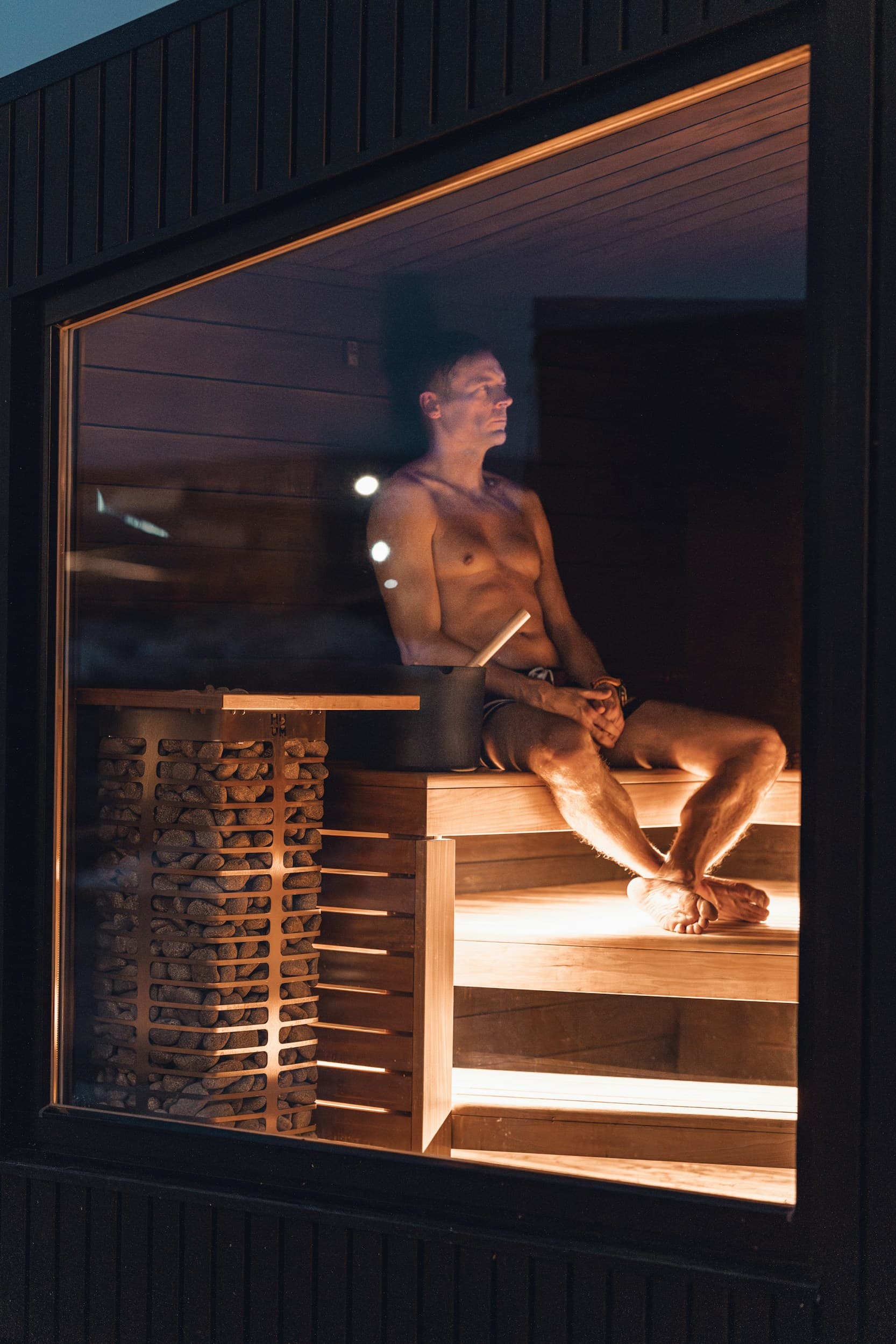
A traditional sauna uses a heater to warm the air and room. An infrared sauna uses radiant panels, usually at a lower air temperature. That difference describes the heat; it does not tell you whether a room is private, social or the right choice for you.
How the heat is different.
In a traditional sauna, the heater warms the room around you. Water on appropriate sauna stones can change the humidity, where the venue allows it. Infrared panels deliver radiant heat to the surfaces they face. Harvia’s explanation of the two heating methods describes that technical distinction. Follow the instructions for the room you are actually using.
The word “sauna” on a booking page is not the whole specification. Ask which kind of room is included and whether the booking is for that room alone or for a club with several spaces. Do not assume that a photograph of timber benches identifies the heating system.
Private and social are a separate choice.
“Infrared” describes the heating technology. “Social” describes a shared experience. An infrared room can be shared, while a traditional sauna can be booked privately. Capacity, noise expectations and booking rules come from the venue rather than the name of the heater.
- For time alone, ask whether the booking gives you exclusive use and whether the space has a quiet-room policy.
- For a visit with a friend, check that you can book together and whether both people need a membership or guest pass.
- For a club visit, check which rooms are included, whether they need separate reservations and how much time the whole booking allows.
Which sauna is better for you?
There is no single answer based on the heater alone. Start with the experience you want and the venue information you can verify. If your choice depends on a medical condition or a specific health outcome, a comparison article cannot decide suitability for you.
Research also needs context. Hussain and Cohen’s review of dry sauna studies found potential benefits but called for better evidence on adverse effects, frequency and duration. That is not proof that one room type is best for everyone. We do not rank our saunas by promised health outcomes.
Compare the whole visit, including price.
A private-room price and a club-entry price may pay for different things. Check the booking window, towels, showers, room access and any additional charges before comparing the headline amounts. A membership only becomes useful when its hours and rules match the visits you can make.
Our sauna membership cost calculator uses Saunday’s published founding rates and lets you include peak-session extras and towel hire. For the broader decision, the sauna guide brings room types, first visits and costs together.
What Saunday is planning.
Saunday’s first club is planned for Narrabeen on Sydney’s Northern Beaches. The plan brings a large Finnish social sauna, large infrared saunas and ice baths into one club. Choose your heat and take time to sit between rounds.
Neither Narrabeen nor the planned Darlinghurst club is open yet. Final sauna specifications, temperatures and capacity will be confirmed before opening. The images on this page show the kind of experience we are talking about, not a completed Saunday venue.
You can choose which facilities to use. Planned club sessions last 75 minutes, with a maximum of one session per day. Read the current opening and first-visit answers before joining the free Narrabeen waitlist.


